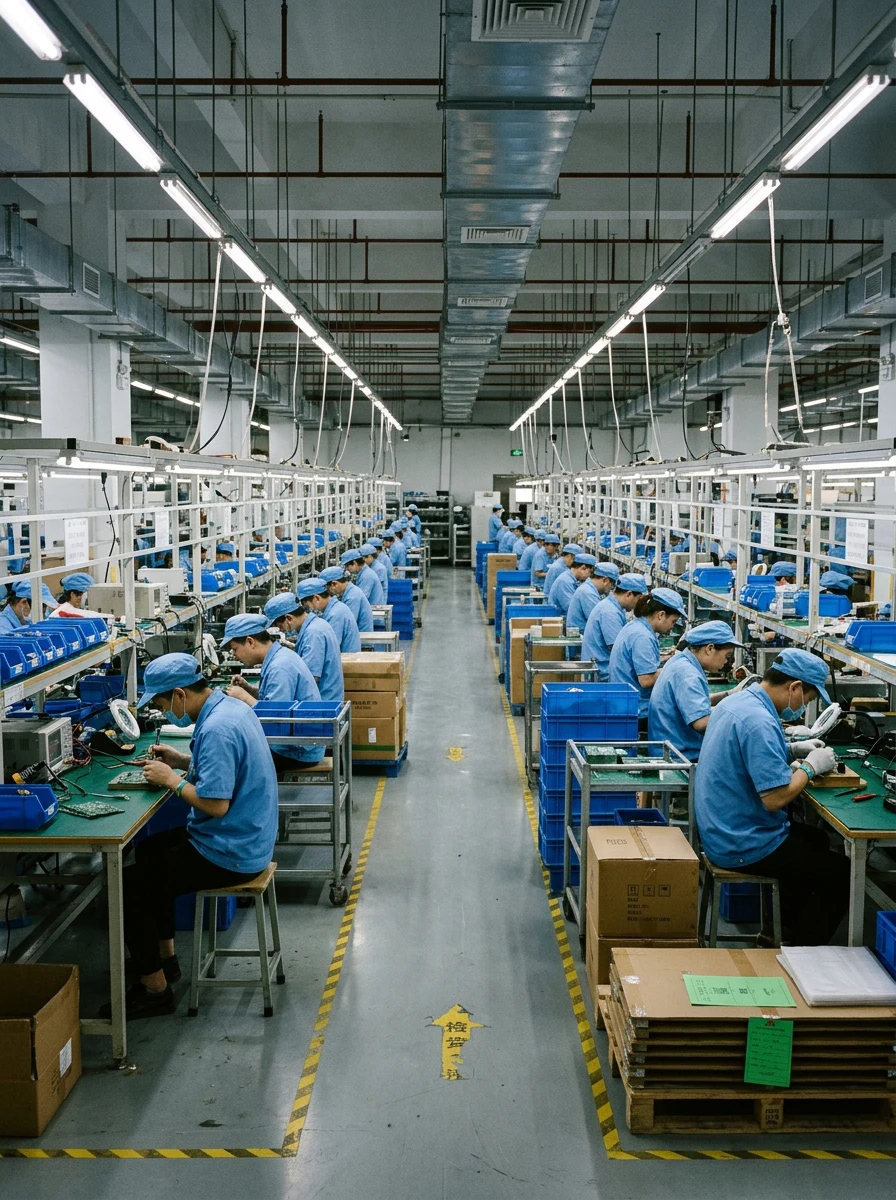
A website with glossy photos and a polished Alibaba profile does not prove that a company owns a modern, compliant factory. When demand spikes, unscrupulous suppliers frequently accept large purchase orders and quietly subcontract manufacturing to unregulated back-alley workshops with inferior machinery and substandard quality control. An unannounced or scheduled on-site factory audit verifies real operational capacity before production begins.
Key Audit Checkpoints
1. Active Machinery & Production Lines
- Counting physical machinery: Are CNC milling machines, injection molding presses, automated SMT lines, and cleanrooms actually in place?
- Verifying machinery brand and maintenance logs: Worn-out, poorly calibrated equipment inevitably causes high dimensional scrap rates.
- Operational status: Are machines currently humming with work, or are they covered in dust and stored in darkness?
2. Real Worker Headcount & Shift Logs
- Comparing declared employee count against workers physically present on the floor.
- Auditing clock-in logs and shift rotations to determine whether the factory possesses sufficient labor to meet your delivery deadlines without excessive illegal overtime.
3. Raw Material & Component Inventory
- Checking whether the warehouse stores recognized, certified raw materials or unmarked, cheap scrap plastics and uncertified metals.
- Inspecting environmental controls in storage areas: moisture control for electronics, temperature regulation for adhesives and resin compounds.
4. Detecting Subcontracting Risks
A factory producing 10,000 units per month cannot legitimately fulfill an order for 100,000 units in 30 days without farming out the work. We cross-reference historical output records against your order volume to detect subcontracting risks early.
GetChinaHelp inspectors operate across the manufacturing heartlands of Guangdong, Zhejiang, Jiangsu, and Shandong.
View our on-site factory walk-through service or schedule an audit for your supplier.