What to Put in a Pre-Shipment Inspection Checklist (Before You Pay the Balance)
Paying the balance is the point of no return. Before that wire goes out, the goods belong to a negotiation you can still win. After it, you are negotiating from a container that is already on the water.
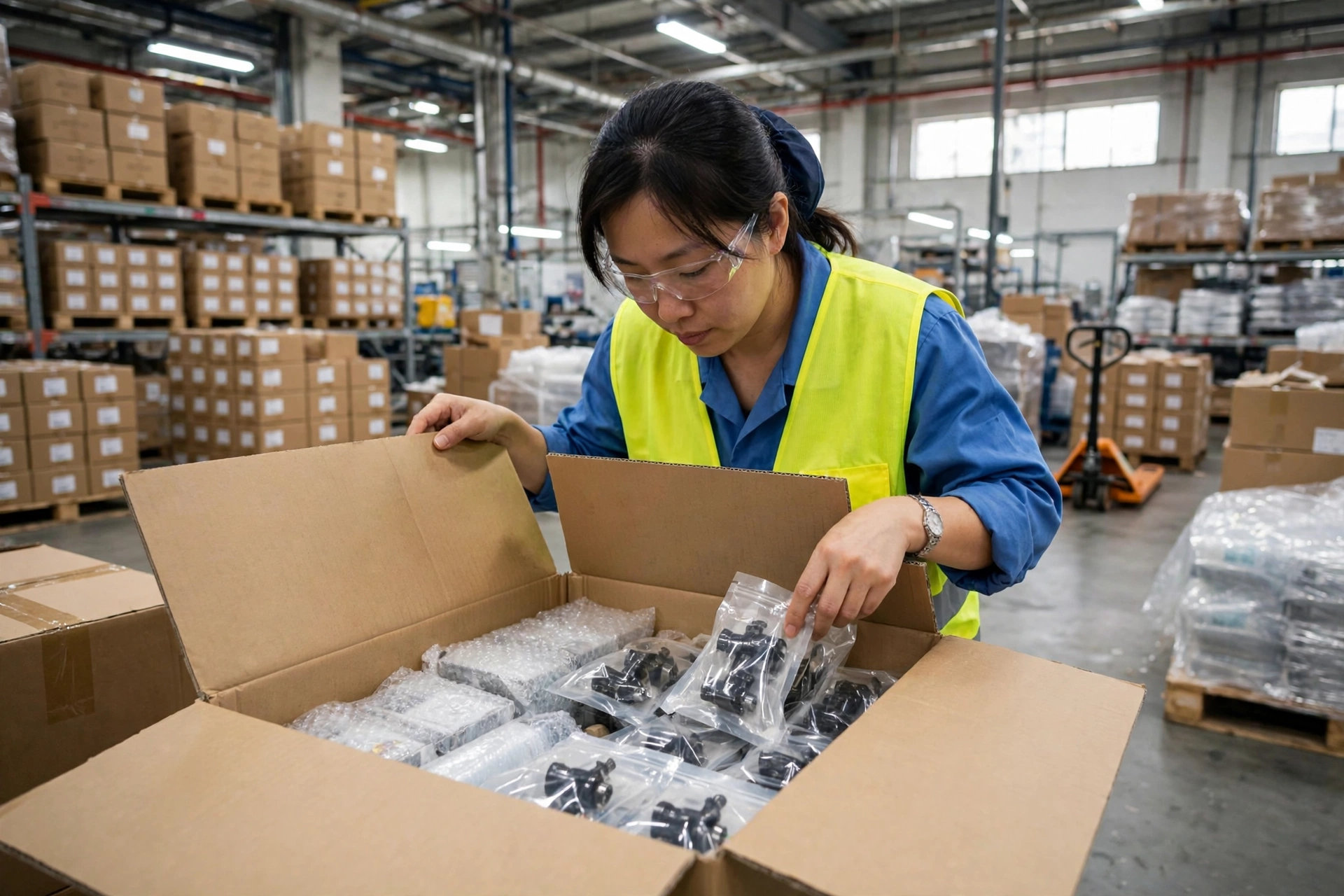
Supplier photos will not protect you here. They are real photos, usually, but they are the supplier's choice of angle, light, and sample. A pre-shipment inspection (PSI) exists to replace that choice with yours: an independent person on the ground, opening cartons you choose, checking what you agreed, and sending you the evidence before you pay.
This is the checklist we actually use on site, and the one you should send to any inspector before they go.
First, what a PSI is — and what it is not
A PSI is a sampling-based check, not a 100% inspection and not a certification. The inspector opens a defined sample, records what is seen, and grades defects. It does not test in a laboratory, it does not certify the product, and it does not guarantee the unsampled units.
That limit is the point. A good report says clearly what was checked, how many units were checked, and what was not checked. If a report claims to guarantee the whole shipment, do not trust it.
The same honesty applies to sampling. We use the ISO 2859-1 / AQL General Inspection Level II method as a reference, and we report the sample size and the defect count — not a pass/fail verdict dressed up as a certificate. As a simplified reference:
| Lot size (units) | Sample size | Major limit, ref. AQL 2.5 | Minor limit, ref. AQL 4.0 | | --- | --- | --- | --- | | 151–280 | 32 | 2 | 3 | | 281–500 | 50 | 3 | 5 | | 501–1,200 | 80 | 5 | 7 | | 1,201–3,200 | 125 | 7 | 10 |
A demonstration report on our site makes this concrete: lot size 200 units, sample checked 20 units, cartons sampled 5 — with 3 defective units found, 0 critical, 1 major, and 2 minor. That is the shape of a useful finding: small numbers, tied to named units and photos, with a recommendation attached. It is a demonstration sample, not a client project, and it is labelled as such.
The five sections your checklist needs
Write your checklist in these five sections. Send the specification sheet, the approved golden sample photos, and the order details with it. An inspector cannot check "quality" in the abstract — they can only check the items you named.
1. Quantity
Count first. A short shipment discovered after payment is the most expensive defect of all.
- Total carton count against the packing list
- Cartons sampled and opened, by carton number
- Outer carton dimensions and gross weight, spot-checked on at least 3 cartons
- Quantity per carton against the order
Ask for the carton numbers in the report and the photos. If the numbers do not match the packing list, stop there and decide before moving on.
2. Workmanship
This is where most shipments fail quietly: the product works, but it looks wrong, feels wrong, or will not survive the first week with a customer.
- Surface finish, stitching, moulding lines, burrs, and scratches
- Colour consistency within the same batch, compared side by side
- Assembly fit: lids, hinges, buttons, zips, and seams
- Stains, dirt, dents, and broken parts
For apparel, add size measurements — at least 2 pieces per size, measured at the key points — plus button and zip function and wash-label and composition-label checks. For home and plastic goods, add assembly fit and a non-destructive hand check for sharp edges and surface damage.
Grade what you find. We use Critical / Major / Minor, and every defect gets a photo number and a count:
- Critical: wrong goods, total functional failure, or a visible safety problem
- Major: a defect a customer will return, such as a misaligned lid on one unit in the demonstration sample above
- Minor: a cosmetic issue a customer may accept, such as two scratched units in that same sample
A report that lists defects without grading them has not finished the job.
3. Function
Test what the product is supposed to do, within non-destructive limits. Do not ask an on-site inspector to dismantle a product or to run a laboratory test — ask them to run the basic function a buyer would run on arrival.
- Power on and power-off rate on the sample
- Buttons, ports, charging, Bluetooth or Wi-Fi connection where applicable
- Accessories present against the packing list
- Instruction manual and warning text present and legible
For consumer electronics, add an accessories and manual check to every sample. If a function fails on one unit, the inspector should test a second unit from a different carton before calling it a pattern — and say so in the report.
4. Packaging and labels
Packaging is not decoration. It is what protects the goods in transit and what customs, the warehouse, and the end customer will read first.
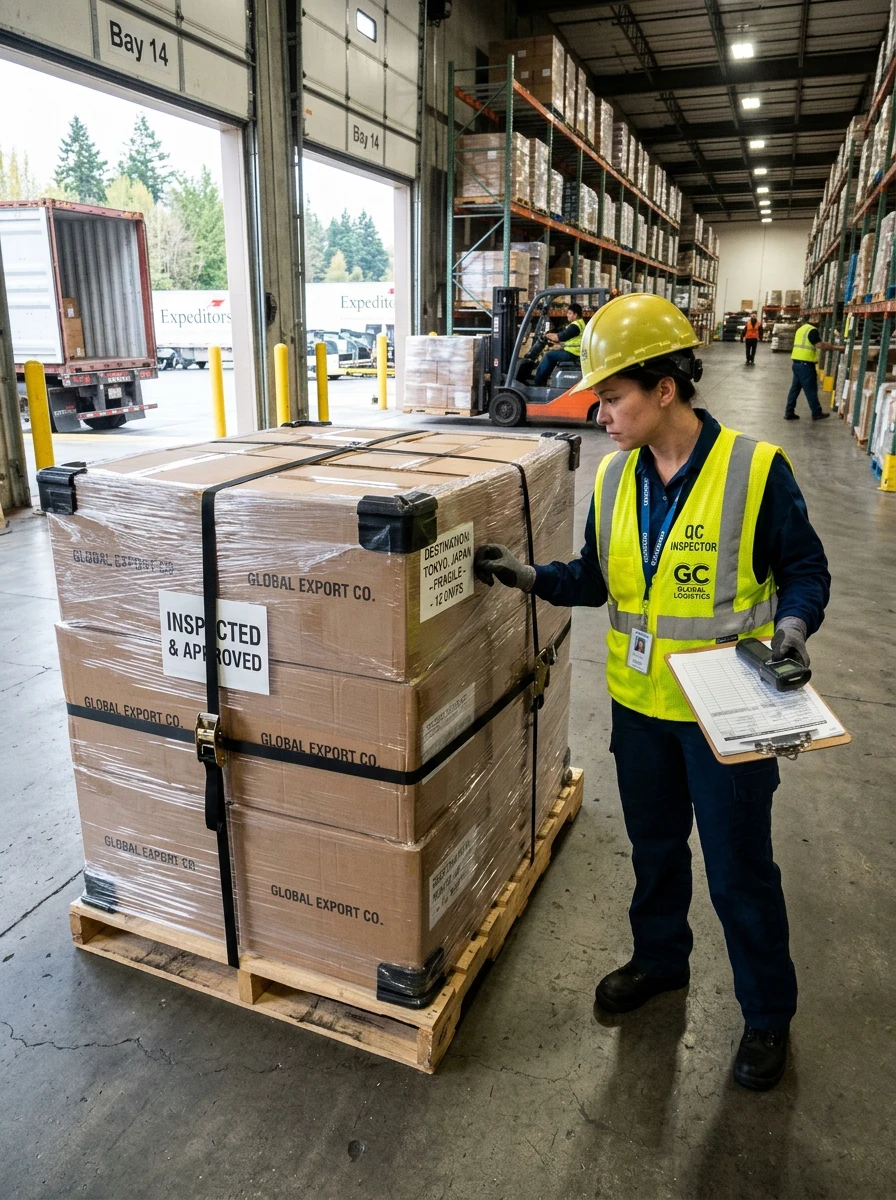
- Inner packaging and outer carton strength as observed, including strapping, corner protectors, and pallet condition where applicable
- Shipping marks, SKU, barcode, country of origin, and warning text — checked word for word against your documents
- Labels on the product itself, not only on the carton
One wrong barcode or one missing warning label can hold a shipment longer than a cosmetic scratch ever will. Photograph the labels. Do not accept "labels checked" without the photo.
5. Consistency with the specification
The last section is the one suppliers most often fail: the goods are fine in general, but they are not the goods you ordered.
- Physical product against the specification sheet, item by item
- Physical product against the approved golden sample and Pantone swatches where applicable
- Differences photographed and numbered, even small ones
If you changed the specification after the deposit, send the latest version and say so in writing. An inspector checking against an old spec will produce a correct report about the wrong product.
PSI vs during-production inspection: when to check
A pre-shipment inspection happens when the goods are finished and packed, before the balance is paid. A during-production inspection (DUPRO) happens while production is running, when a problem can still be fixed on the line.
Use DUPRO when the order is large, the product is new, or a previous order had a systematic defect. Use PSI for every order where you are paying a balance before the goods leave. Many buyers do both: DUPRO to catch a process problem early, PSI to confirm the finished lot before payment.
Do not use a PSI to fix a production problem. By the time the goods are packed, the only options left are fix, rework, discount, or do not ship yet. That is still a valuable decision — it is just a more expensive one than catching it mid-production.
Three red flags to act on immediately
The supplier refuses a visit. That is information, not a scheduling problem. A supplier who will not allow an independent visit before the balance is paid is telling you something about the risk. In our process, if a supplier refuses entry, the client only pays the $99 desktop verification fee — the rest is not charged. Start with that $99 desktop check if you have not paid a deposit yet: business licence, export records, and public footprint, with a one-page brief on whether a visit is worth it.
The report has no sample size. "Checked the goods, looks good" is not a report. Ask for the lot size, the sample size, the cartons opened, and the defect list by grade. If those numbers are missing, the check did not happen in a form you can act on.
The photos do not match the numbers. Every defect in the list should have a photo number. Every photo should have a timestamp or a carton reference. If the numbers and the photos cannot be reconciled, ask for the missing evidence before you pay.
How we run this check at GetChinaHelp
If you want this checklist run for you, the route is simple and the scope is agreed in writing before payment:
- Recorded inspection, from $179: about 2 hours on site, raw unedited footage, 30+ timestamped photos, a Critical / Major / Minor defect list, and a formal English PDF report within 48 hours after the visit. No time-zone rush — you review when you are ready.
- Live inspection, $249 for 3 hours: you join live, direct which cartons to open, and ask for another angle in real time by text. You receive the full replay, 30+ timestamped photos, and the English report within 24 hours after the session.
- Full-day inspection, $399 for 6 hours: for larger sample batches or multiple lots, with 60+ timestamped photos and a detailed English report within 24–48 hours.
- Desktop verification, $99: if you have not paid a deposit yet, start here. We check what is publicly verifiable and tell you whether a visit is worth it.
You pay your supplier directly. We only charge the agreed service fee, and we never handle goods payments. The report gives one of three advisory recommendations — ship, fix first, or do not ship yet — and the final decision stays yours.
Six execution bases cover Shanghai, Hangzhou, Yiwu, Shenzhen, Beijing, and Guangzhou. Travel and access are confirmed in writing per task, before you pay.
Frequently asked questions
How many units will be checked? On a sampling basis, using the AQL reference above. The exact sample size depends on your lot size and is written into the report, with the defect count beside it.
Can I direct the inspection live? Yes, on the live package. During the live window you can ask the inspector to open specific cartons, re-test a function, or zoom in on any detail. The full session is recorded either way.
How fast do I get the report? Live inspections: within 24 hours of the session. Recorded inspections and factory audits: within 48 hours.
Does an inspection guarantee the whole shipment? No. A visit records the agreed checks and the accessible samples. It is not certification, laboratory testing, or a whole-batch guarantee. You decide whether to buy, pay, or ship.
What if the goods fail the check? You get the evidence the same day, while there is still time to negotiate, fix, or walk away. That is the whole point of checking before the balance is paid.
Before you wire the balance
Send your inspector the product, the supplier address, the order stage, and the five sections above — with the specification sheet attached. Agree the sample size, the evidence you will receive, and the report deadline in writing. Then let the evidence decide.
If you want us to run it, share the brief and tell us what worries you most. We will tell you the same day whether we can do it, what it costs, and exactly what you will receive within 24 hours after the visit.